


Description
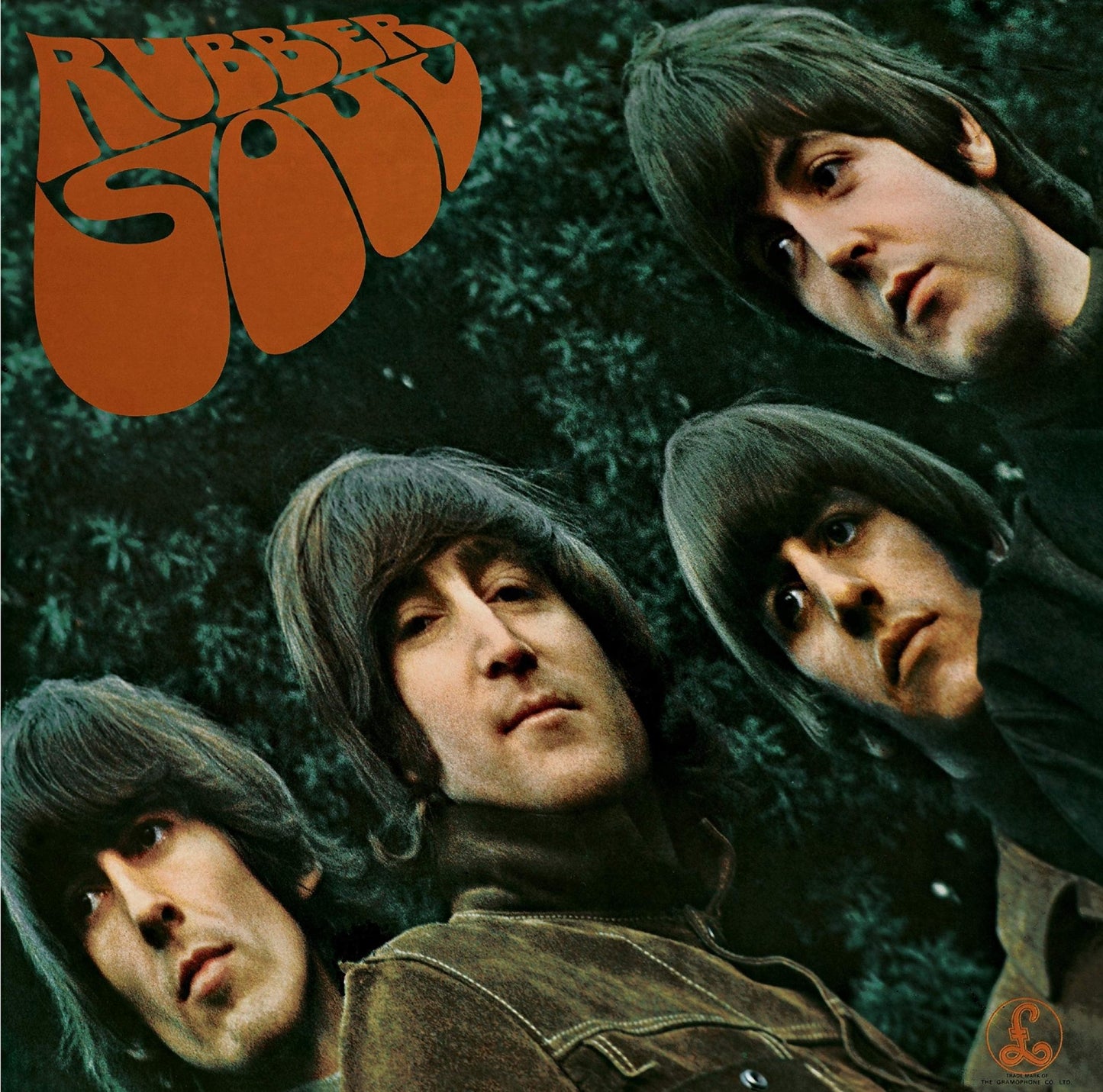
It is always astonishing to see the pressure under which the Beatles produced their most fantastic albums. For Rubber Soul, their sixth album, they had only four weeks, as the album was supposed to be in stores in time for the Christmas season. Before that, Lennon, McCartney, Harrison, and Starr had been on tour for months. Physical and artistic exhaustion would have been a normal consequence.
Other musicians would probably have collapsed under the announcement of producing a successful album in four weeks. This is also an aspect that distinguishes a supergroup from ordinary mortal bands. And then you don't just record any album for the sake of Santa Claus and world peace, but a true work of art, as later experimental albums like Revolver or Sgt. Pepper's Lonely Hearts Club would be.
Musicologists, as with many Beatles works, still today wear out their fingertips trying to determine the outstanding significance of the album for the canon of pop music, and the same goes for Rubber Soul. In 2012, Rolling Stone placed it at number 5 on its list of the 500 most important albums of all time, and it also achieved platinum status in the UK and regularly appears on various magazines' best-of albums.
In August 1965, the Beatles returned from their North American tour and began writing the album, influenced by diverse styles such as soul, Bob Dylan's newly electrically amplified folk-rock, a good dose of country (heard on "What Goes On," for example), and George Harrison's growing interest in Indian music.
Even though The Kinks had strictly speaking discovered the instrument for their sound before, Norwegian Wood, written by McCartney and featuring Harrison's sitar playing, sparked a 60s hype for this instrument and Indian music and culture in general. Norwegian Wood is now considered a cornerstone for the emergence of World Music. And all this simply because Harrison began to take an excessive interest in everything that drifted over from India to the Western world. Of course, he took sitar lessons from the greatest sitar player of all time: Ravi Shankar.
Further musical journeys can be discovered in the song Michelle, a song that strolls along the Seine with a baguette under its arm, or Girl, which dances Greek Sirtaki and has had a bit too much Ouzo. "In My Life" captivates with a beautiful bridge featuring a piano that sounds like a harpsichord. And none of the Fab Four lagged in their development. Ringo Starr experimented with a range of unusual percussion instruments such as rumba balls and a tambourine, which are now commonplace in many drummers' repertoires. The song "Wait," with its a cappella opening, is entirely unusual and only becomes recognizable as a Beatles song again in the chorus. It sounds avant-garde and at the same time like gospel. You have to be able to achieve this blend!
Like everything the Beatles touched, Rubber Soul was a resounding success. When the album was released on December 3, 1965, record stores couldn't reorder fast enough, so eagerly was the record snatched from their hands. The album would remain in the album charts for 42 weeks and climb to number 1 in its second week. It then stayed there for eight weeks, like a grandpa in his armchair.
Tracklist:
-
Drive My Car (2009 - Remaster) (A1)
-
Norwegian Wood (This Bird Has Flown) (2009 - Remaster) (A2)
-
You Won't See Me (2009 - Remaster) (A3)
-
Nowhere Man (2009 - Remaster) (A4)
-
Think For Yourself (2009 - Remaster) (A5)
-
The Word (2009 - Remaster) (A6)
-
Michelle (2009 - Remaster) (A7)
-
What Goes On (2009 - Remaster) (B1)
-
Girl (2009 - Remaster) (B2)
-
I'm Looking Through You (2009 - Remaster) (B3)
-
In My Life (2009 - Remaster) (B4)
-
Wait (2009 - Remaster) (B5)
-
If I Needed Someone (2009 - Remaster) (B6)
-
1Run For Your Life (2009 - Remaster) (B7)