


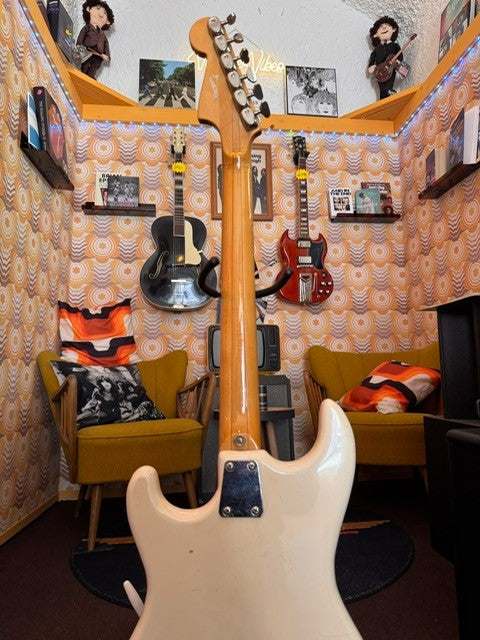


The story behind it
Early 1960s (Origins & Design):
The model line launched in the first half of the '60s as a typical, highly specialized Eko solidbody guitar, influenced by Italian accordion building and borrowing visually from brands like Hagstrom or Fender (Jazzmaster/Stratocaster style). Typical of these early models was a body covered in glitter celluloid (sparkle finish) and a honeycomb back.
1965–1966 (Renaming and Standardization):
With the move to a larger factory in Recanati (1965), the designation was officially changed from the plain number 820 to the name Condor, as Eko had begun using aggressive animal names at the time. The truss rod adjustment moved from the headstock end to the neck joint, and the necks were made more naturally in a 5-piece maple/rosewood construction.
1967 to the End (Change and Aftershocks):
After a period of crisis and changes at the plant (including following a factory fire in 1966/1968), the model continued to be built. The striking celluloid coverings gave way to solid-color finishes, and the old electronics with slide switches were replaced by more conventional switches and tone and volume roller controls (wheel controls). Growing competition from Japan and the death of founder Oliviero Pigini in 1967 ultimately led to production winding down toward the end of the 1960s.


